
Reservations
A warmer welcome starts before they arrive.
Take online reservations, manage capacity, and give your floor team a clear view of upcoming bookings. Included with operations on both public plans.
Make a reservation
Your guests' next visit starts here.
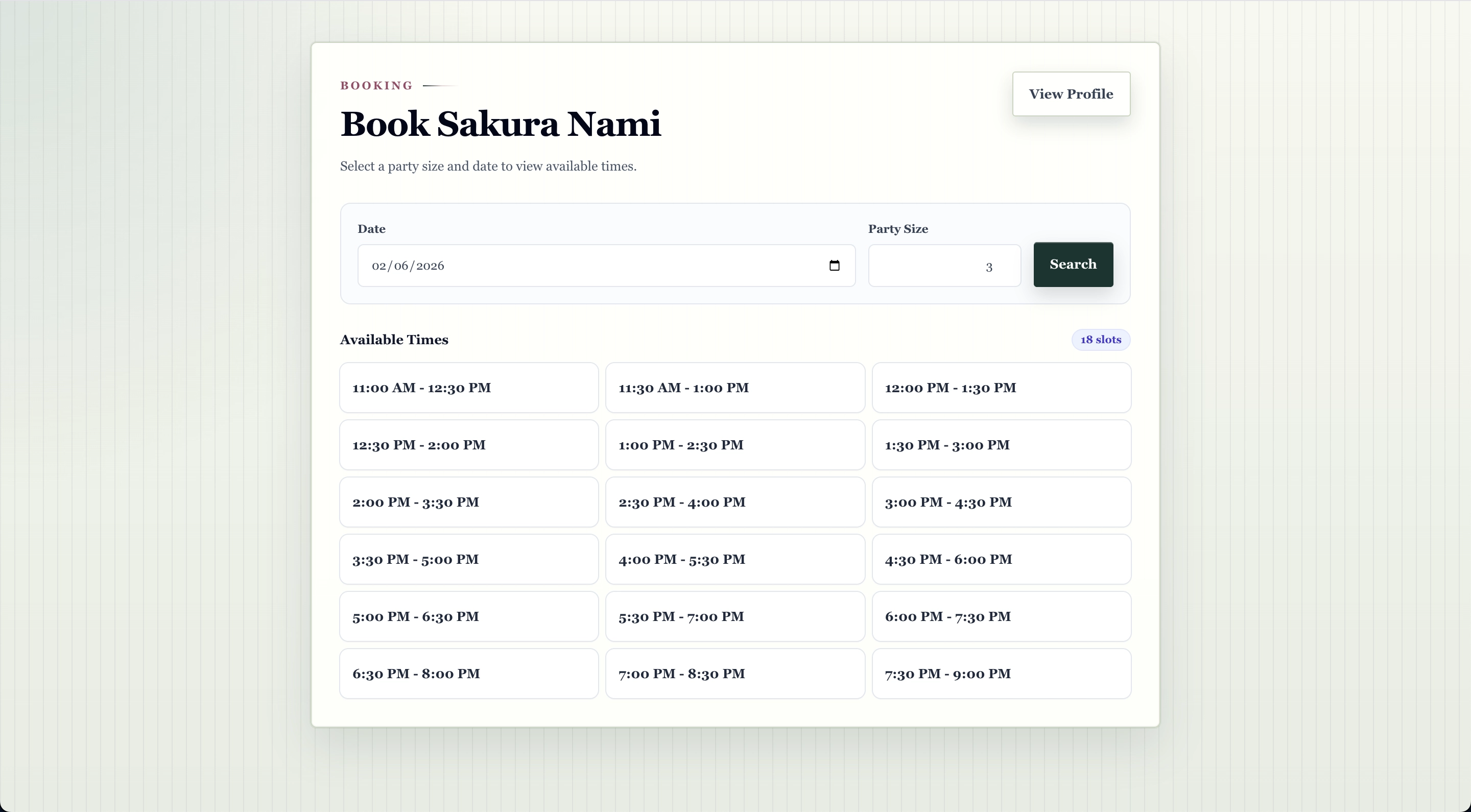
Give guests a branded page to choose their party size, date, and time. Keep your menu, hours, photos, and current offers close by on your Public Profile.
Prepare the room
Set the pace for your service.
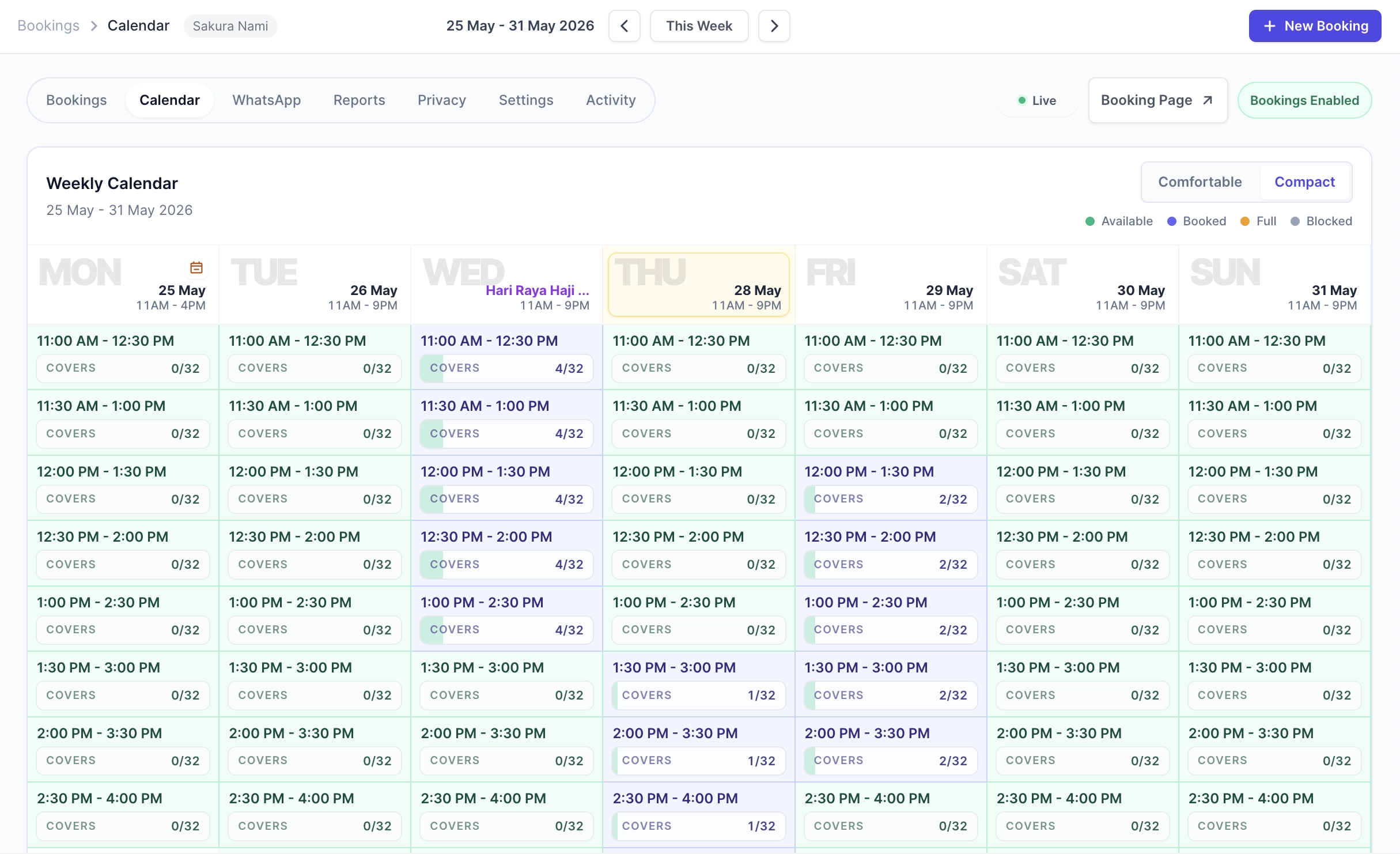
Manage booking hours, party sizes, turn times, and slot capacity. Review pending requests and confirmed bookings in the calendar so the team knows what to prepare for.
Plan the team
Booked covers meet staff coverage.
See aggregate booking demand alongside your weekly staffing plan. Managers can use it to adjust coverage without exposing guest contact details to everyone viewing the roster.
Explore operations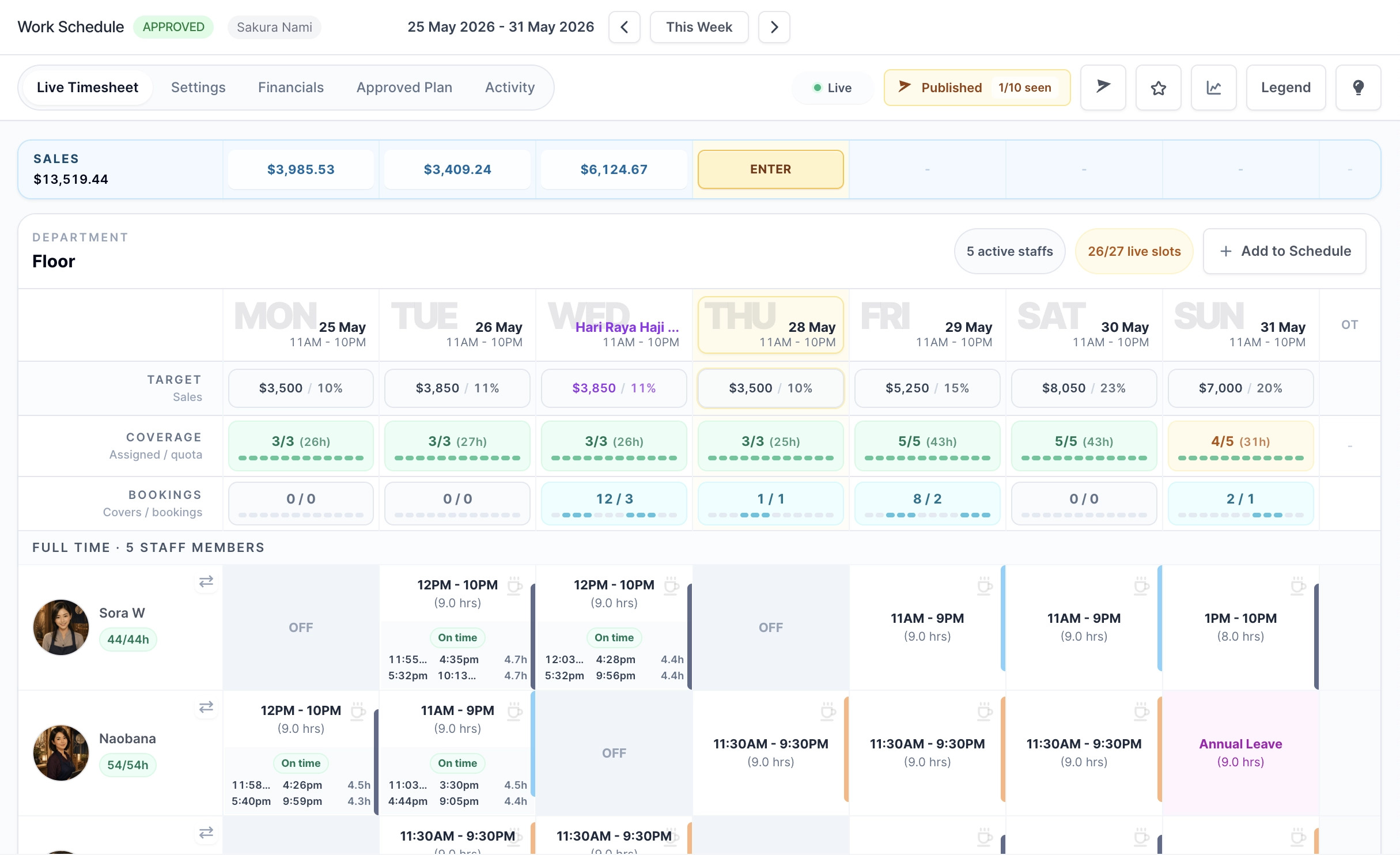
Learn from service
Get to know the rhythm of your week.
Review booking patterns, peak slots, and covers before planning the next similar service. Bring phone reservations into the same booking workflow.
Compare plans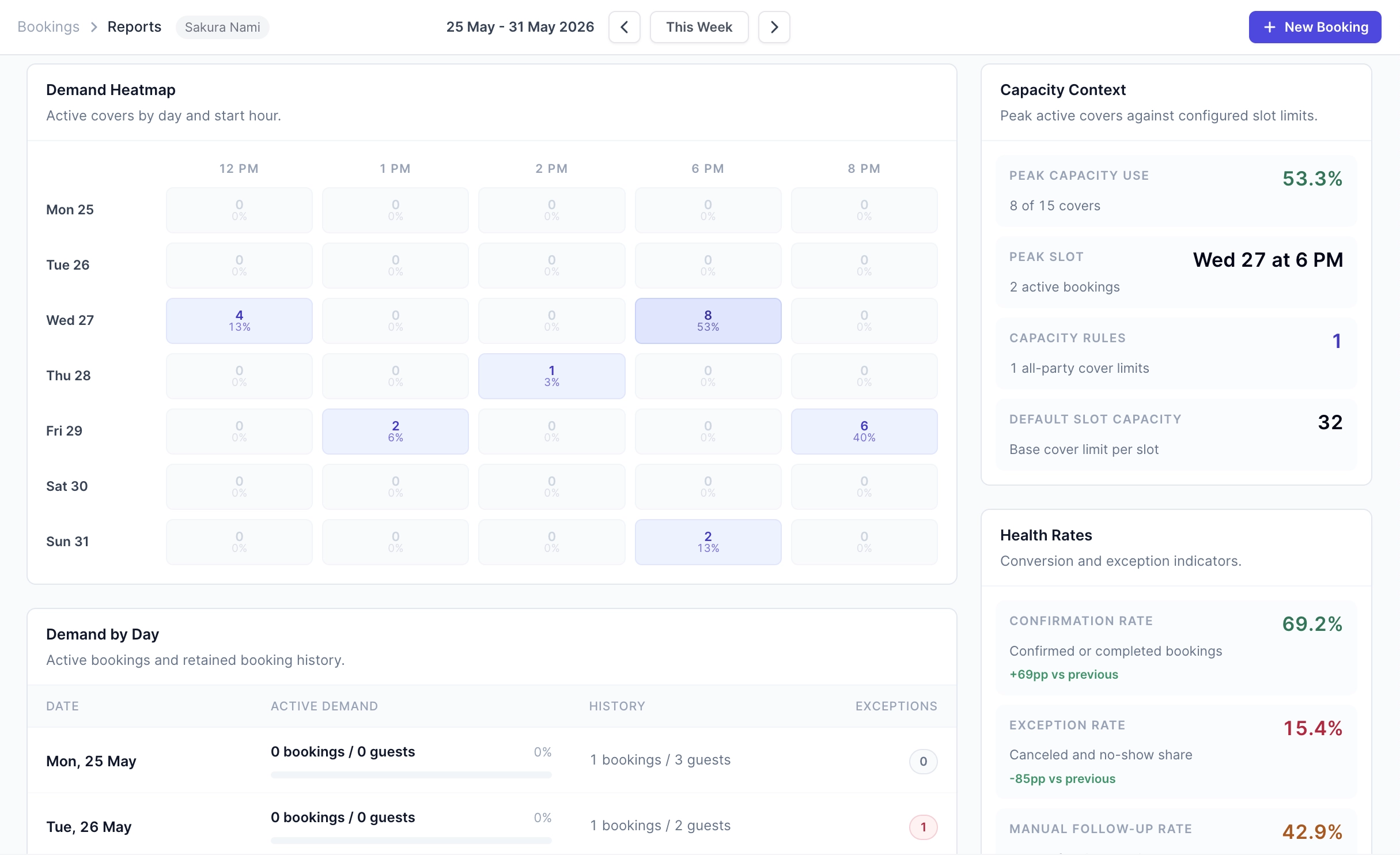
A few useful answers
Good to know before you start.
Which plan includes restaurant bookings and reservations?
Native reservations and bookings are included on both public plans. Booking routes also depend on booking settings and Bookings Management access for manager operations.
Does RSP replace public profile hours with booking hours?
No. Public Profile hours stay focused on customer-facing business details. Booking availability is controlled by booking hours, special hours, blackouts, holds, and capacity rules.
Can managers create phone bookings?
Yes. Managers can record phone-only bookings; once confirmed, they remain on the schedule without creating a callback action.
Does booking demand automatically change the roster?
No. Booking demand is planning context. It appears as aggregate covers and booking counts so managers can decide how to adjust coverage.
Can staff see customer booking details from the schedule?
No. Schedule-facing indicators show aggregate demand only. Customer names, emails, phone numbers, and notes stay in booking-manager surfaces.
How are customer privacy requests handled?
Booking privacy workflows can redact customer-identifying details from booking and customer-contact records while retaining de-identified operational booking history.
Made for hospitality
Make next week easier to run.
Bring operations, reservations, and payroll together. Not sure where to begin? Tell us about your outlet.